






A short comparison of the most widely used methods of microfluidic flow control
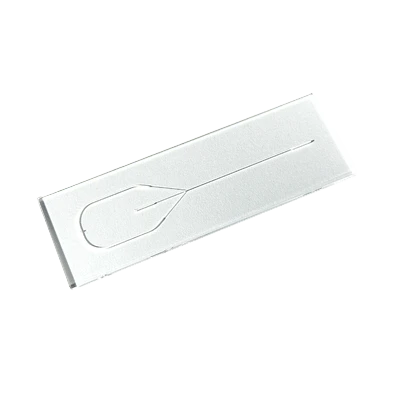
Microfluidics broadly encompasses the tools and techniques used to manipulate and monitor volumes of fluid on the microscale. Arguably the two most integral parts of any microfluidic setup are the microfluidic device, on which fluids flow, and the equipment used to control this fluid flow. Each type of microfluidic flow control comes with its advantages and drawbacks depending on what it is being used for. This article provides an overview of some of the most common microfluidic control techniques, including their relative strengths and weakness and their most suitable applications. If you are a microfluidics user looking for a microfluidic flow control solution we always recommend that you take the time to discuss your application with us here at Darwin Microfluidics to ensure that we provide you with the best possible system for your flow control needs.
Syringe Pumps

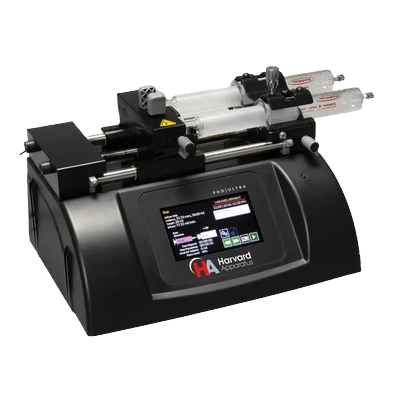
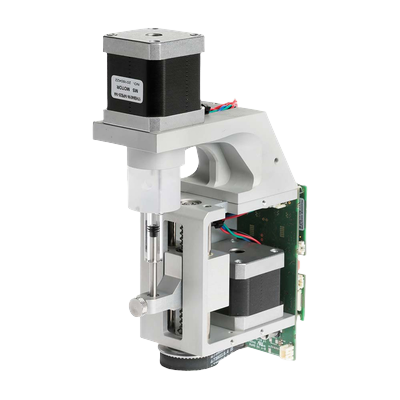
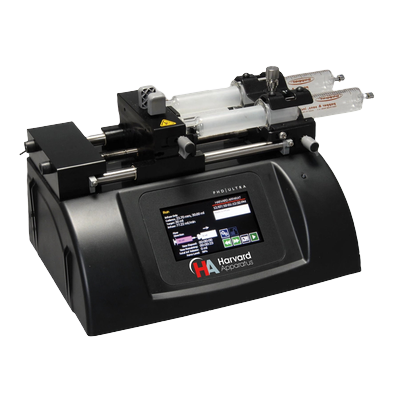
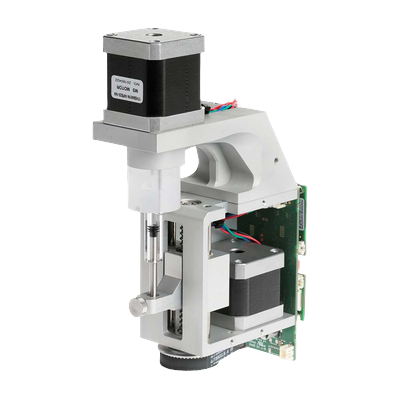
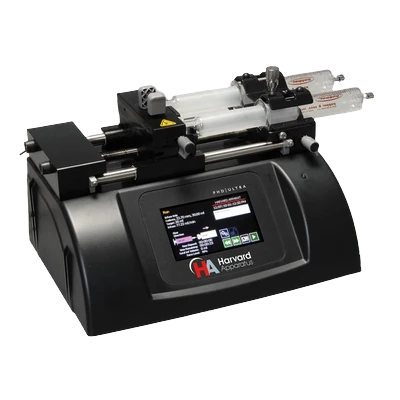
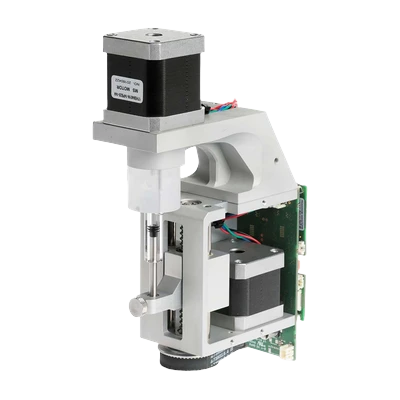
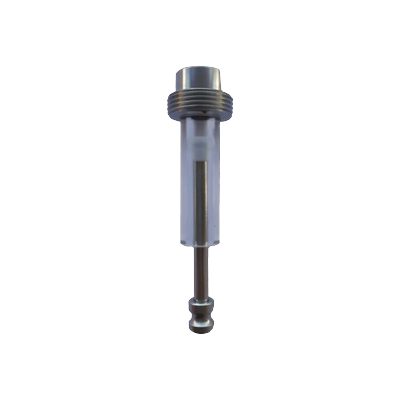
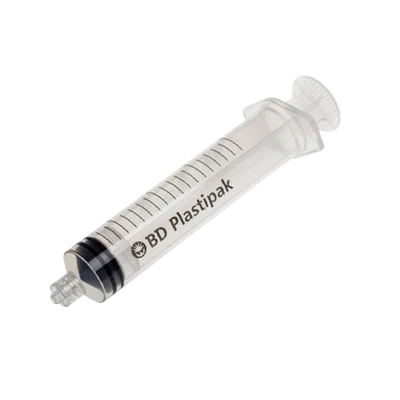
 Syringe pumps are the most commonly used microfluidic flow control solution and have been long established due to their simplicity and often low cost when compared to other flow control methods. Syringe pumps can usually be divided into two categories: classic syringe pumps, and pulseless syringe pumps. Classic syringe pumps are quite inexpensive, but at the cost of generating flow oscillations at low flow rates, such as those employed in microfluidic setups. On the hand, pulseless syringe pumps, as the name suggests, offer much improved flow stability performance. The strengths and weaknesses presented hereafter will primarily focus on pulseless syringe pumps, due to their greater relevance toward microfluidics, but many of the same principles still apply to classic syringe pumps.
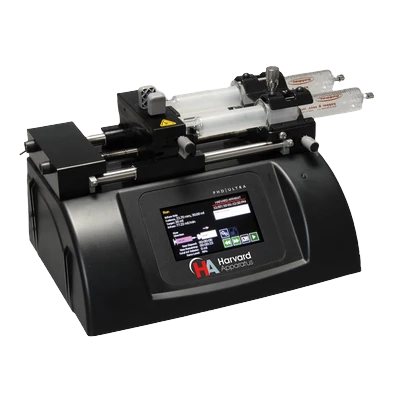
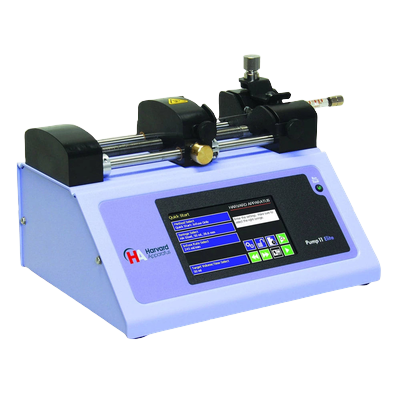
The greatest advantage of syringe pumps is their ease of use. Even with little expertise, syringe pumps can be set up and pumping fluid within minutes. With programmable syringe pumps (like the Harvard Apparatus Pump 11 Pico Plus Elite syringe pump), users can go beyond simple infusion and withdrawal operations and create customized pumping methods that consist of simple to complex flow profiles, adding even more versatility to an already tried and true flow control method.
On the contrary, the primary disadvantage of pulseless syringe pumps is their responsiveness. The responsiveness of syringe pumps can be rather slow, from seconds to hours depending on the microfluidic setup.
Strengths
|
Weaknesses
|
Peristaltic Pumps

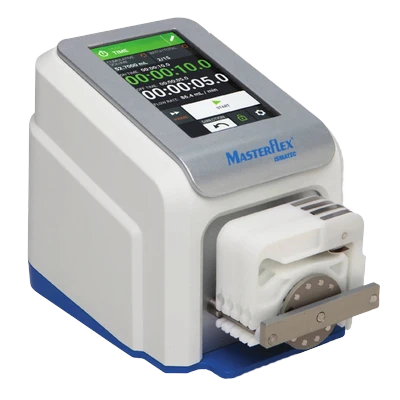
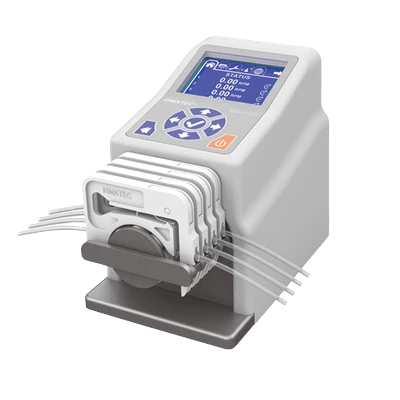
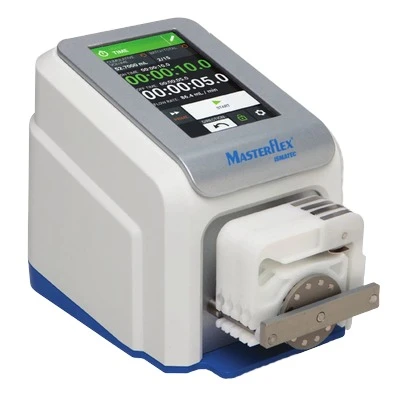
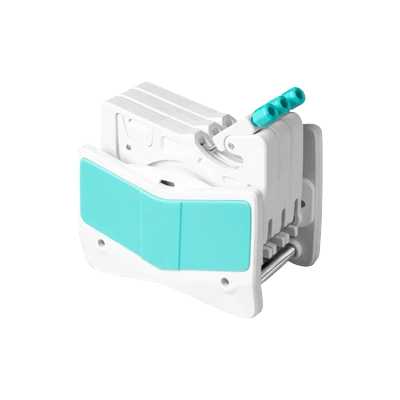
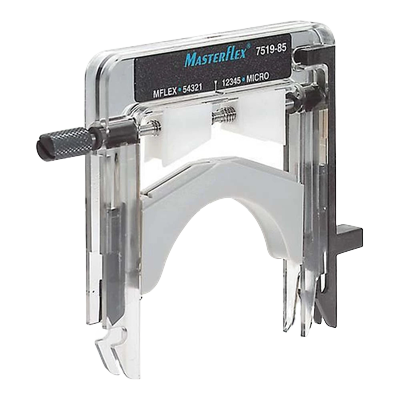
 Peristaltic pumps work on the principle of pinching a fluidic tube with a number a rollers attached to a rotor in a circular pump casing in order to force the fluid in a given direction through the tubing. While they generate strong pulses in the flow rate, they allow the continuous circulation of fluid, which is especially useful in long-term experiments. Another advantage of peristaltic pumps is their non-fluid-contact operation, whereby the fluid being pump and the pumping mechanism itself are completely isolated from each other by the wall of the tubing. This can be important in applications where the risk of contamination must be closely monitored or hazardous media are being used.
Strengths
|
Weaknesses
|
Pressure Controllers

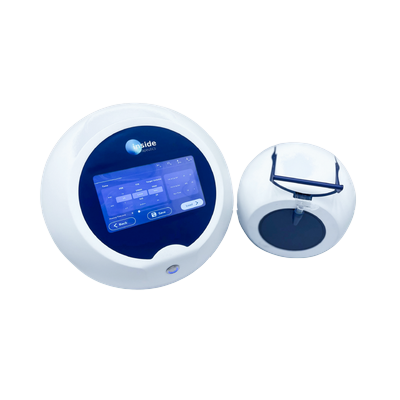
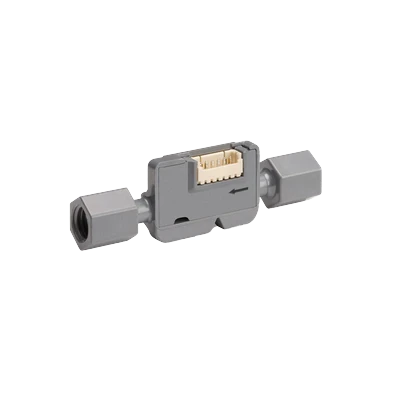
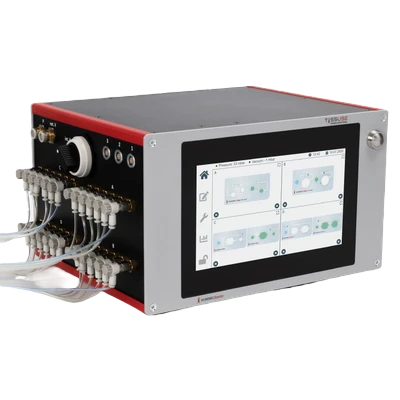
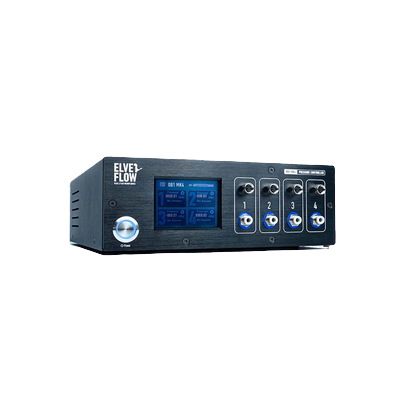
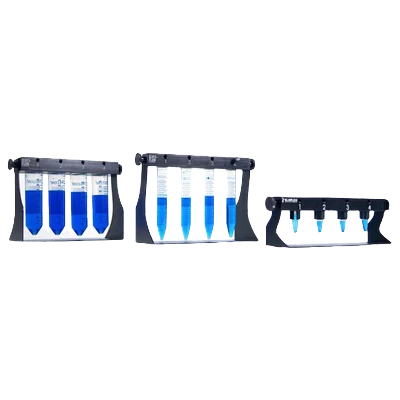
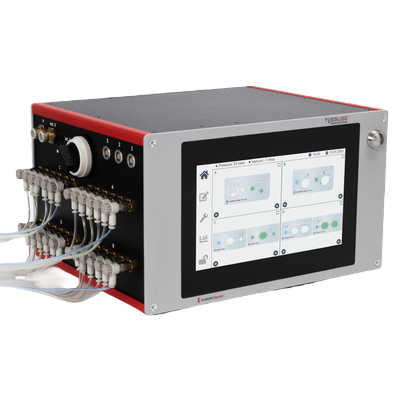
 Pressure controllers control flow by pressurizing fluid tanks or reservoirs in order to force the microfluidic sample out of the tank and into the microfluidic system. They are most commonly used when researchers need responsive and stable flows, as pressure controllers are able to establish pulseless flows in a short time frames (80 ms). The lack of moving mechanical parts to drive the flow allows pressure driven flows to be smooth at any flow rate being used, and being pressure driven, changes in the pressure propagate throughout the system with no delay. By integrating feedback from flow sensors with modern microfluidic pressure sensors, users can accurately control the flow rate in the system in addition to the pressure.
Strengths
|
Weaknesses
|
